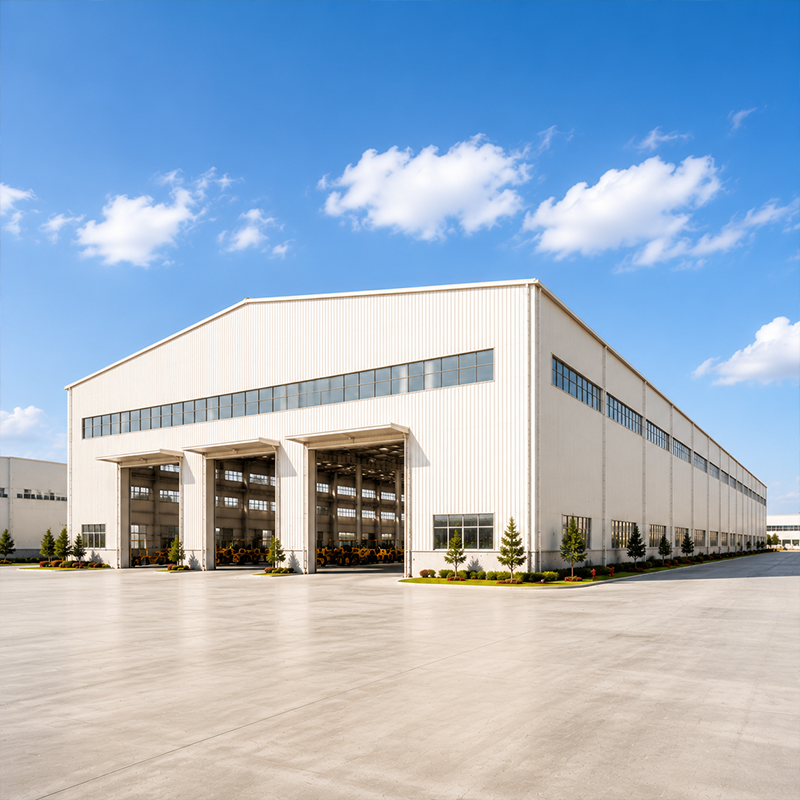
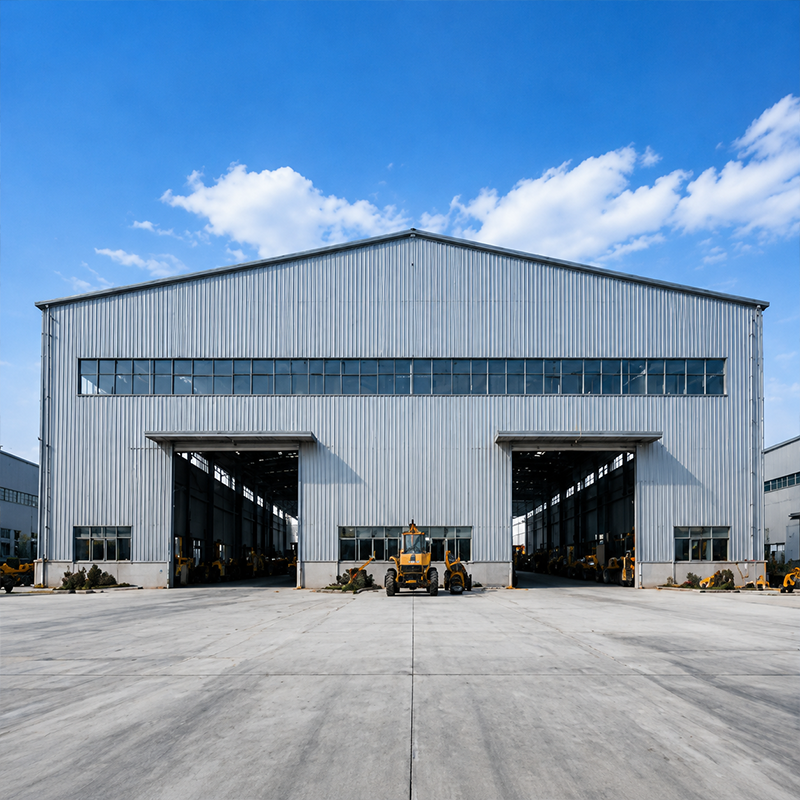
Heavy-Duty Production Plants: Category Overview
Heavy-duty production plants are large-scale steel-framed industrial facilities engineered to support demanding manufacturing operations, overhead crane systems, heavy equipment loads, and continuous production workflows. Buyers evaluating heavy-duty production plants for the first time often compare them to lighter construction formats — including steel trusses for pole barn shelters, standard PEB building configurations for storage, or custom metal homes and light commercial structures. The structural specification gap between those applications and a purpose-built heavy-duty production plant is significant: it begins with material grade selection and extends through crane beam design, dynamic load distribution, and long-term surface protection.
The defining characteristic of heavy-duty production plants is not static strength alone, but the capacity to sustain cyclic dynamic loading from overhead cranes, heavy-press operations, and vibrating industrial equipment across a design service life of 25 to 50 years. This requires a fundamentally different procurement approach compared to standard workshop construction — and it is one that rewards early specification clarity over later design revision cycles.
Key Product Characteristics
Heavy-duty production plants in this category span three engineering tiers matched to different crane tonnages, operating environments, and structural performance requirements. Understanding the tier boundaries before comparing quotations prevents the most common source of scope misalignment in this category.
-
Standard Heavy Manufacturing: Heavy-duty production plants at this tier use Q355B structural steel with 50-year return period wind and snow load design, M20 10.9S high-strength bolts, and hot-dip galvanization at no less than 600 grams per square meter or 150-micron DFT marine-grade paint. This specification is appropriate for overhead crane systems rated below 20 tonnes and production environments without extreme temperature or corrosion exposure.
-
Q355D Crane Assembly Grade: Heavy-duty production plants requiring 20-tonne to 50-tonne overhead crane support use Q355D structural steel with verified minus 20 degree Celsius low-temperature impact toughness. Q355D is specified when standard Q355B ductility cannot be guaranteed under cyclic dynamic loading from crane operations. These heavy-duty production plants incorporate glass flake epoxy coating at floor and column base level for abrasion resistance, and 100-millimeter Rockwool sandwich panel cladding achieving 30-decibel-plus sound attenuation and Class-A fire protection.
-
Q420B High-Capacity Grade: The highest-specification heavy-duty production plants in this category use Q420B high-strength steel with Z-direction performance grades (Z15, Z25, or Z35) to prevent lamellar tearing in thick-section connections under 200-tonne crane loading. These heavy-duty production plants are built under EN 1090 EXC3 or EXC4 certification for the most demanding structural applications. The four-layer fluorocarbon coating system at total DFT of 200 microns or greater, certified to ISO 12944 C5-H, extends coating service life beyond 25 years in coastal and chemical processing environments.
-
Structural System: All heavy-duty production plants in this category use multi-span rigid portal frame construction with built-up variable-section H-beams. The variable-section design optimizes steel distribution relative to the bending moment profile — meaning heavier primary sections do not always produce a more cost-efficient frame. Structural efficiency depends on span-to-height ratio, load distribution, and connection configuration.
-
Crane Integration: Overhead crane beam and runway integration is designed into the primary frame structure at the engineering design stage — crane girder seats, rail alignment tolerances, and vertical clearance are coordinated with buyer-specified crane systems before shop drawings are issued. When a 50-tonne crane operates at rated load, the visible downward flex in the crane beam is within design limits if the crane girder was sized conservatively. The operational failure mode occurs when crane beam design was treated as a standard checkbox item rather than a coordinated engineering deliverable between the building structure and the crane manufacturer.
Common Applications for Heavy-Duty Production Plants
Heavy-duty production plants serve manufacturing and assembly operations where standard PEB building systems would be structurally underspecified:
-
Heavy Machinery and Vehicle Assembly: Heavy-duty production plants supporting 20-tonne to 200-tonne multi-crane linkage for excavator manufacturing, heavy truck assembly, mining equipment fabrication, and specialized vehicle production. Eave heights from 18 to 30 meters and configurable clear-span assembly bay widths accommodate the lifting geometry and floor-level equipment layouts these operations require.
-
Industrial Metal Processing: Production environments where vibrating equipment, heavy presses, or continuous crane cycling generate dynamic load conditions beyond the design envelope of a standard PEB building system intended for warehousing or light manufacturing.
-
Aerospace Hangar and Large Structure Fabrication: Heavy-duty production plants with 60-meter clear spans, 30-meter eave heights, and dual-trolley 200-tonne overhead crane systems. EN 1090 EXC3 or EXC4 certification is the relevant fabrication quality reference at this scale, and lattice column structures replace standard H-section columns to achieve the required load-to-span geometry.
-
Specialized Process Manufacturing: Unlike custom metal homes or pole barn structures supported by steel trusses for agricultural or light commercial use, heavy-duty production plants for chemical processing, automotive manufacturing, or mining equipment fabrication require building specifications integrated with the production process from the structural design stage — not retrofitted after the frame is erected.
How to Select the Right Heavy-Duty Production Plant Specification
Selecting the correct heavy-duty production plant specification begins with three decision conditions that change the structural and procurement outcome significantly:
Crane Load Requirement: If overhead crane capacity above 50 tonnes is required, Q420B structural steel with Z-direction performance grades and EN 1090 EXC3 or EXC4 certification is the appropriate starting specification for heavy-duty production plants at that load level. For crane requirements between 20 and 50 tonnes, Q355D with glass flake epoxy protection and verified low-temperature impact toughness is the correct tier. For crane systems rated below 20 tonnes, Q355B structural steel with verified 50-year design loads is sufficient — specifying a higher grade for a lower load application does not improve structural efficiency in heavy-duty production plants.
Operating Environment: If the heavy-duty production plant site is in a coastal location, or the facility will operate heavy manufacturing processes with chemical or moisture exposure, surface protection specification must reflect that combination from the outset. Standard factory primer systems are not designed for coastal industrial environments. Hot-dip galvanization at or above 600 grams per square meter, or multi-layer fluorocarbon systems certified to ISO 12944 C5-H, represent the functional minimum for those conditions.
Span and Headroom: Most heavy-duty production plants in the 20 to 50-tonne crane range operate within spans of 30 to 50 meters and eave heights of 12 to 18 meters — where portal frame efficiency is highest. If equipment installation requires clear heights above 25 meters or spans beyond 50 meters, the lattice column structural tier is the appropriate design format, though it increases erection coordination complexity. A recurring issue in multi-crane heavy-duty production plants is that crane beam elevation and rail alignment across adjacent bays is not coordinated early in the design process, creating interference at commissioning that requires costly modifications. Confirming crane beam positioning across all bays before shop drawings are issued eliminates this problem entirely.
In most heavy-duty production plant procurement processes, steel grade selection and crane integration scope must be confirmed before structural design begins. Deferring these decisions to the shop drawing review phase adds revision cycles that extend the overall project schedule in ways that are not visible in a fabrication lead time quotation.
Procurement Considerations for Heavy-Duty Production Plants
When comparing heavy-duty production plant quotations, verifying that crane beam integration scope, surface treatment specification, and structural material grade are fully documented before price comparison begins is the most important procurement step. A quotation covering primary frame steel tonnage but excluding crane girder sections, runway rail clips, and crane connection details is not comparable to a fully specified alternative — and the scope gap typically only becomes visible after order confirmation.
Structural calculations for heavy-duty production plants should reference relevant standard categories for material grade, portal frame design guidelines, and corrosion protection classification. Fabrication facilities certified to EN 1090 EXC3 or EXC4 for high-consequence structural applications provide an independently verifiable quality reference relevant to buyers facing structural permit approval requirements. Multi-span and multi-bay heavy-duty production plants for large-scale industrial development require crane beam elevation, expansion joint placement, and secondary framing coordination across all building units to be addressed at the structural design stage, not resolved as site decisions during erection.

 EN